Play
It is in playing and only in playing that the individual child or adult is able to be creative … and it is only in being creative that the individual discovers the self
D.W. Winnicott
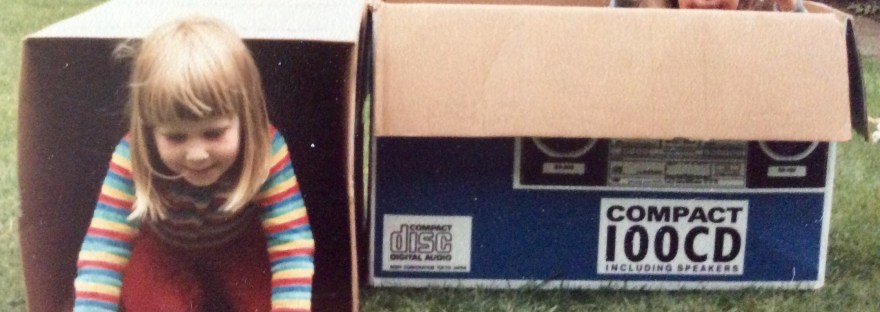
Play is sometimes described as the language of children – a language that most of us forget, or which falls into disuse. But more than being a language, play is a form of writing. Play is how children write themselves into the world. When children play they write down – they act out – their experiences, wishes, fantasies and emotions through games and later through stories. Play can be scary, joyful, creative, frustrating, but rarely boring.
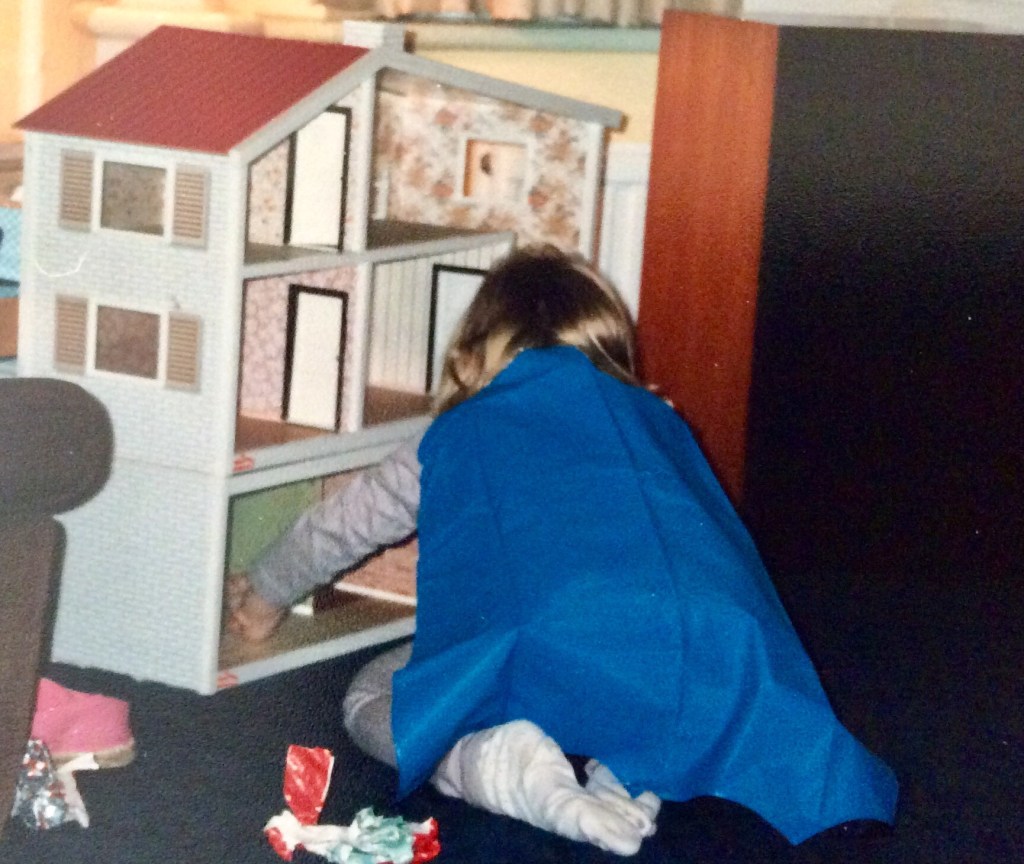
A little girl who puts her toy monkey to bed over and over again ‘writes’ about her experience at bedtime – the moment of each day when she is left alone. Then she makes the monkey wake up and experience the joy of being found again each morning.
Figuring things out
Play is a kind of writing that can be thrown away at the end ready for a new one to begin again. Sometimes children produce little play-notes throughout the day like quick artists’ sketches, sometimes these play-writings are more like serious essays and are not finished with until a few weeks or months go by. These ones are usually particularly important projects but when they’re done, they’re done.
I remember being taken to a friend’s house to play and my mother accidentally knocking on the wrong person’s door. A woman we didn’t know opened the door and swore at us. At that age I didn’t have the words to articulate what had happened or why I was thinking about it, but I remember looking at a monster book and seeing her there, making her appear and disappear. And at some point I stopped.
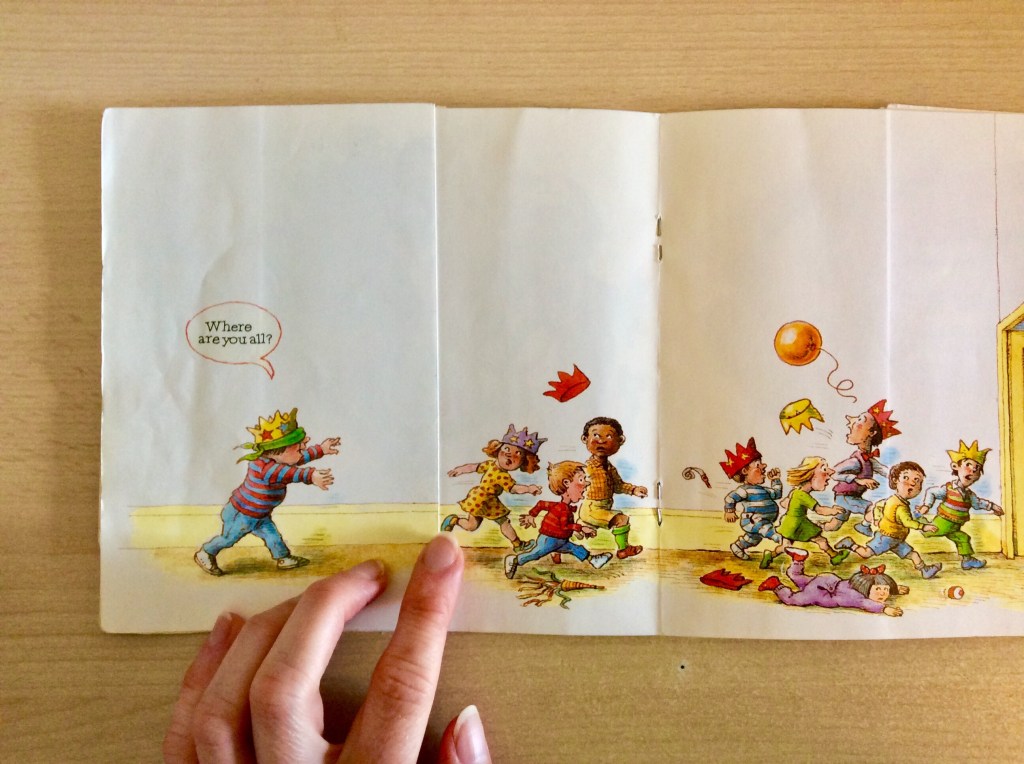
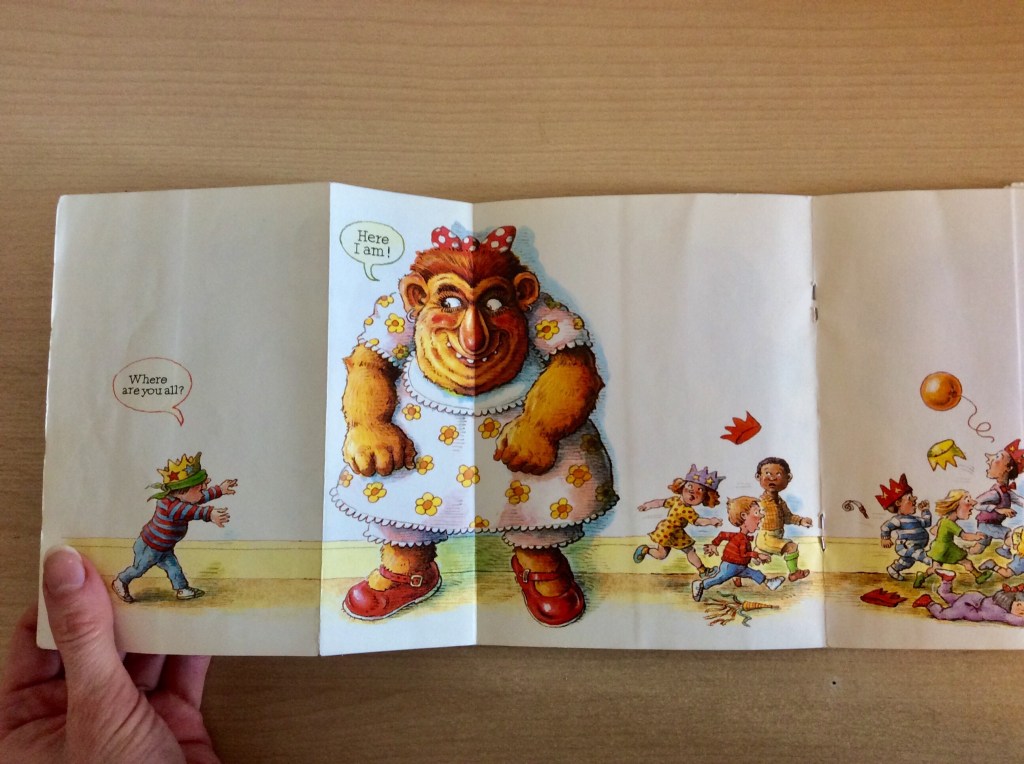
This play-writing doesn’t necessarily need to be translated by adults. It just needs to be given time and space to happen in all its mysterious forms: from putting things in containers and the joy of peek-a-boo to a fascination with Spiderman or Elsa from Frozen.
Sometimes, though, when a child has been through something difficult, is struggling generally, or just doesn’t seem to be finding their way in the world working with a play therapist can help. Playing alongside an experienced therapist can help children to sort things out in their own mind and find a way with what is difficult.
Playing with others
Play is the creative act of becoming a human among other humans and it becomes more complex as children grow and start to discover others. At first there is an exchange of objects (this is when parents sometimes become concerned about sharing) or a curiosity about each other. Then, later, children start to play with each other. Play becomes both a way of creating but also sharing stories. This is a complex, private world between children that needs to be given space. However, we can be there to listen to them when they face the inevitable struggles of negotiating play as part of a social group.
Young children often want their parents’ attention more than anything else and when they first become absorbed in play or interact with other children it can be a relief but also a bit disconcerting. Parents’ feelings and experiences are just as valid and rich as their children’s (we were all children once) and the Green House Playgroup can also be a place to talk about what it feels like to be a parent. It is not silly to have confusing feelings when your child goes off to play without you (and you’ve been desperate for this moment to happen!). It is surprisingly common to feel both sad and relieved at the same time.
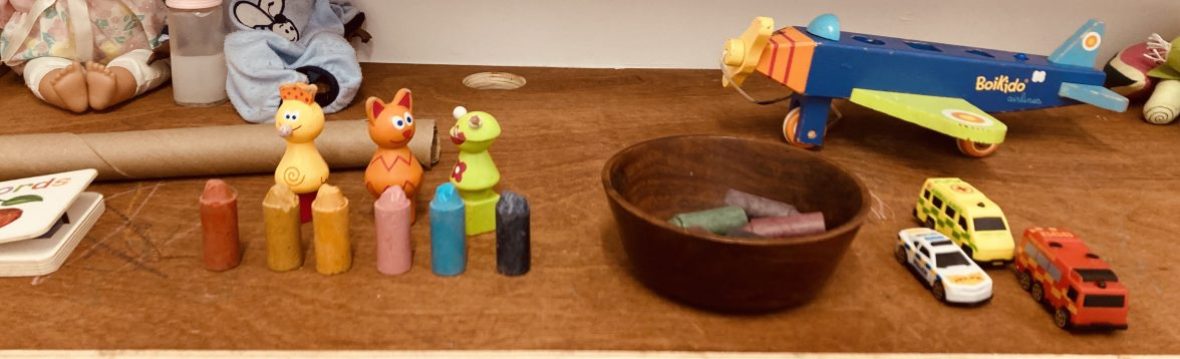
Children have a relationship with these objects we call toys in a way that is not always obvious but they do matter. We don’t always need to understand and perhaps, at times, it’s better if we don’t. But we can simply give children time and space to play, to explore, create, and encounter the other children around them.
Special needs and neurodivergence
In particular I want to look at books and toys for children who have special needs, or are neurodivergent. It is sometimes said of autistic children that they don’t play. While I can understand this observation on the surface I would say that some children play in a different way. Sometimes a child has a very particular relationship to an object that can seem strange to us but vital to them. One quickly realises that it is impossible to take that object away from them. And what would we be trying to take away in that moment? Our own frustration, perhaps?
On the other hand a child’s shy interest in something might be hardly perceptible but once spotted it can be encouraged and used to open up a new world. Toys and play are important for all children and their ways of playing are not all the same. A child who memorises all the train stops on the line is also play-writing, like the girl who puts her toy monkey to bed. We arrive at one stop, we leave, we arrive, we leave…
This blog is an exploration into the world of play, and the world of children’s toys from the perspective of a psychotherapist. I will look at questions such as which toys should I have at home? How do I teach my child to share? Why is my child obsessed with Spiderman or Elsa?
 Red Door Therapy